From Kings to Countrymen

The Hanging Cascades of Sri Lanka

Cascade

TECHNOLOGY

Long term agricultural stability is important for any civilization. The manipulation of water resources using ancient irrigation structures has been an evolving advancement of traditional knowledge rendering it still essential and relevant. Several hydraulic engineering elements that have been used in reservoirs in Europe since the middle of the last century were first invented by ancient Sri Lankan engineers, more than 2000 years ago. This entire system has been tried and tested by time, and still stands to be sustainable technology that works in harmony with ecology.

Cascade

HIGHLIGHTS

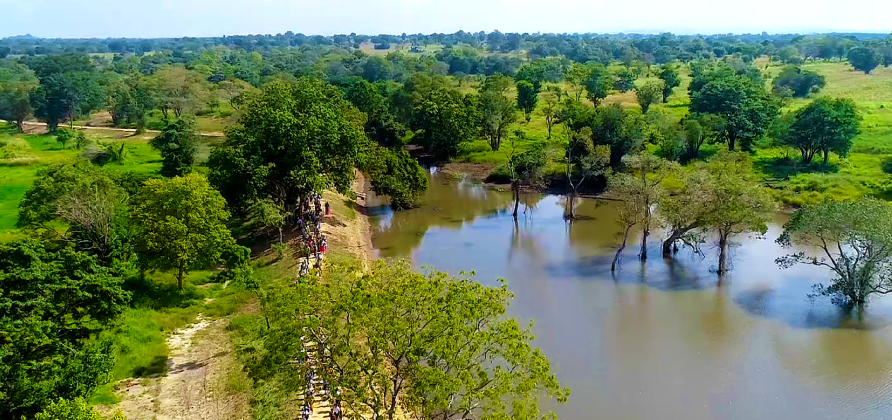
Multilayer eco-system Besides creating flourishing civilizations for millenniums, cascades have created micro-eco systems sustaining cooler, greener habitats, and have given life to a spectacle of biodiversity, agro-diversity and livelihood diversity on what would otherwise have been dry barren land.

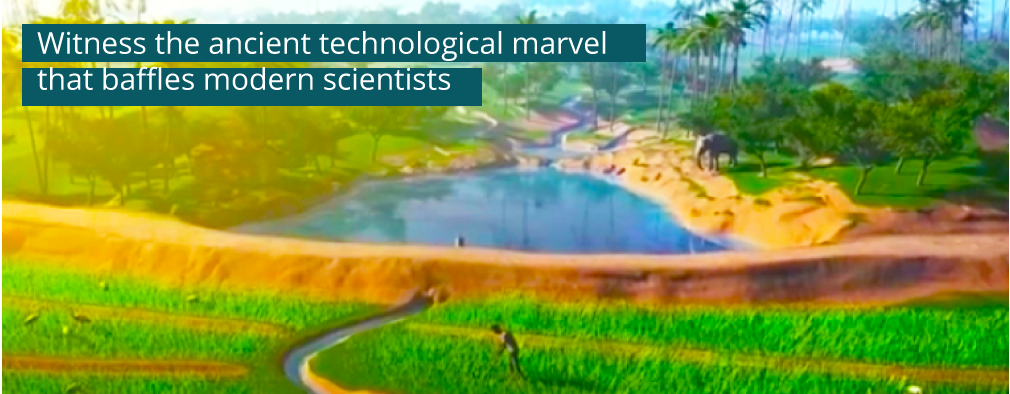
Ecological Kidney This system is an ecological kidney, filtering heavy metals and minerals, allowing only clean and life-giving water to flow through as the water meanders through an oasis within an oasis supporting a unique micro-eco system.

Four Zones Cascades may be split into 4 distinct zones housing a set of unique engineering components or habitats. These include Tank Bund & Tank Bed, Protected Forest in the Catchment, Rain-fed Uplands and Hamlet or high elevation household area.

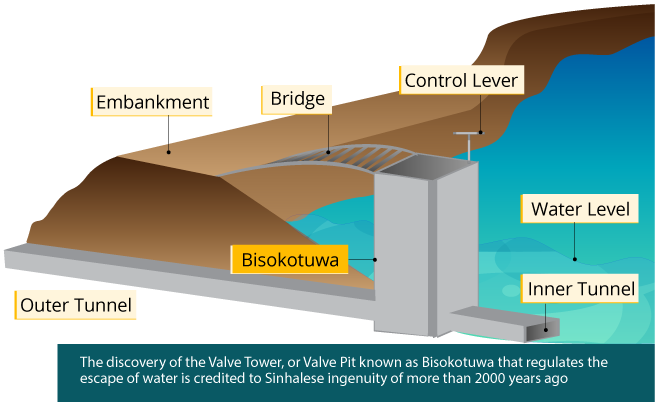
Sorowwa/ Bisokotuwa
(Sluice Gate)

Diyaketapahana
(Water Level Indicator)

Installed close to the sluice gate, dam managers keep an eye on the indicator to control the in and outflow, ensuring the optimal safety of the system.

Ralapanawa
(Stone Liners)

Built as an embankment to prevent erosion caused by water waves, the wave breakers kept the dam safe.

Pitawana
(The Spills)

The feature was designed to remove excess water without damaging the tank bund.

Wewthaulla
(The Upper Inundation Zone)

Built to retain water during rainy season, Wewthaulla would be drained off during drought but not before putting the conserved water to good use.

Mankada
(Zone for Human Activity)

Kattakaduwa
(The Interceptor)

Gasgommana
(The Tree Belt & Perahana)

Mukalana
(The Catchment Forest)

Potawetiya
(The Check Dam & Iswetiya)

Kuluwewa
(Godawala, the Waterhole)

KuruluPaluwa
(The Bird Foraging Area)